World Cup 2026 semi-finals feature top-ranked teams due to new FIFA draw system


Semi-Finalists and Historical Context
The World Cup 2026 semi-finals will feature the four highest-ranked teams globally: Spain, Argentina, France, and England. This marks the first time such a scenario has occurred since FIFA rankings were introduced. These teams navigated their group stages and three knockout rounds to reach this stage.
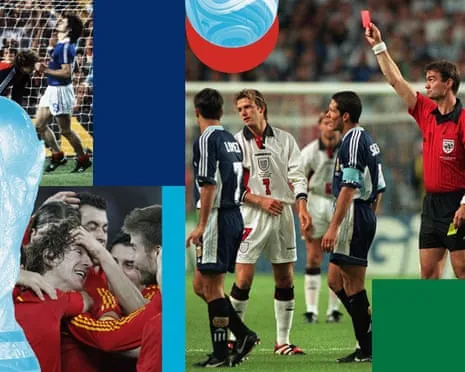
Spain has a history of strong performances in the latter stages of tournaments, having reached the semi-finals of the Euros six times and winning five of them. Their only previous World Cup semi-final appearance was in 2010, where they secured a 1-0 victory against Germany. Their upcoming semi-final opponent, France, defeated them in the 1984 Euros final and a memorable Euro 2000 quarter-final.
France also carries its own historical burdens in semi-finals, notably the traumatic 1982 match against West Germany in Seville, which ended in a penalty shootout loss after a 3-1 lead in extra time. England and Argentina share a deep-seated rivalry, with significant historical moments including the 1986 “Hand of God” incident and David Beckham’s red card in 1998. Their last encounter was a friendly in Geneva in 2005.
New FIFA Pairing System
The current semi-final lineup is not entirely coincidental. FIFA implemented a new draw system for the 2026 World Cup designed to prevent the top-ranked teams from meeting each other too early in the tournament. This system placed Spain and Argentina in opposite halves of the draw, and similarly separated France and England, ensuring they could not face each other before the semi-finals, provided they won their respective groups.
Spain, ranked No. 1 when the draw was made, was paired with No. 2 Argentina and placed in opposite halves, meaning they could not meet before the final. Third-ranked France and fourth-ranked England were also separated in the same manner. This arrangement created distinct pathways for each top seed as group winners, a principle similar to seeding systems used in tennis tournaments like Wimbledon or the Champions League.
This is the first time FIFA has specifically designed a men’s World Cup draw to keep the four highest-ranked teams apart until the semi-finals. The system only protected these teams if they won their groups. For example, if Spain had finished second in their group while Argentina won theirs, they could have met in the round of 32. All four teams successfully won their groups, preserving the intended routes.
Tournament Progression and Impact
The top-ranked teams successfully navigated the knockout stages. Argentina defeated Cape Verde, Egypt, and Switzerland, with their match against Switzerland requiring extra time. Spain overcame Austria, Portugal, and Belgium. France advanced past Sweden, Paraguay, and Morocco, while England progressed by beating DR Congo, Mexico, and Norway.
The routes were not without challenges. Spain eliminated Portugal and Belgium, England faced group winners Mexico and a Norway side that had knocked out Brazil, and France met a Morocco team that had already eliminated the Netherlands. The new system was implemented partly due to the expansion of the tournament from 32 to 48 teams, which introduced 12 groups, eight third-place qualifiers, and an additional round of 32. This format meant that two group winners could potentially meet as early as the round of 16, which happened three times in this tournament.
The new draw system, officially described by FIFA as a way to maintain “competitive balance,” also increased the likelihood of the highest-ranked and most marketable teams reaching the tournament’s final week. This ensures that the highly anticipated semi-final matchups, with France facing Spain and England playing Argentina, are now set.
Read Also
Source: theguardian.com

