England set to face Norway in World Cup quarter-final

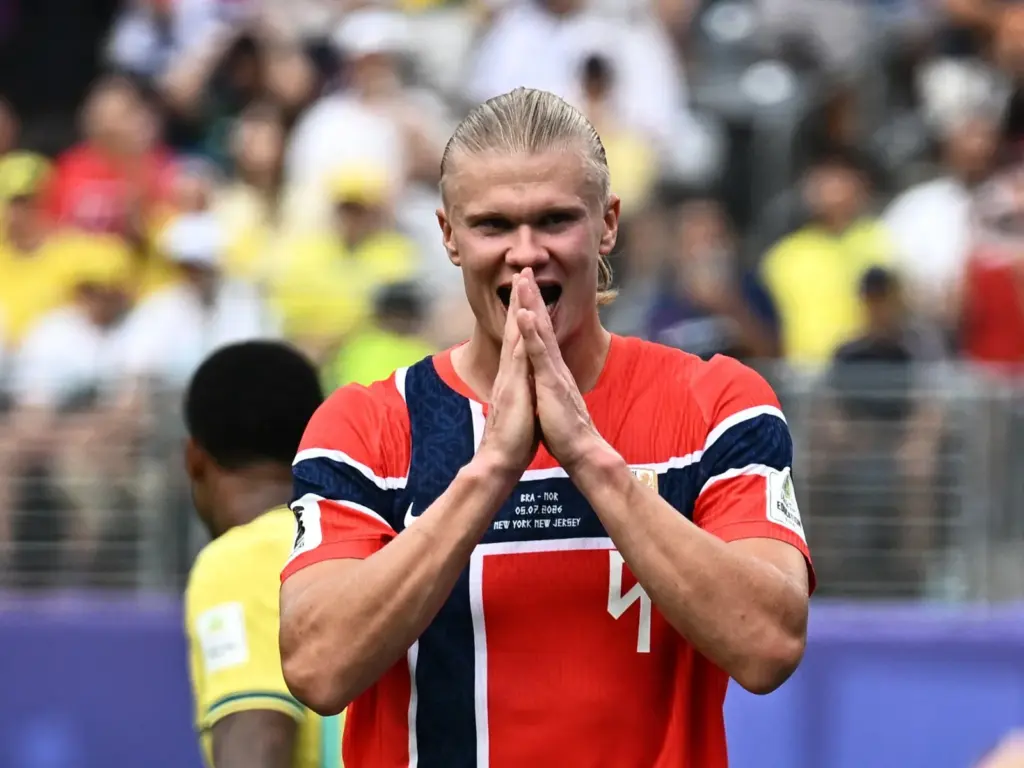
England is set to face Norway in a significant World Cup 2026 match in Miami, Florida. Norway has been described as a dark horse in the tournament, having advanced past Ivory Coast and Brazil, scoring 12 goals across five games. This match represents a challenge for England, who aim to reach the semi-finals.
The encounter will feature two prominent strikers, Erling Haaland of Norway and Harry Kane of England, both leading contenders for the Golden Boot. Haaland has scored seven goals in four appearances. Kane has scored goals in the tournament, including two against Croatia, one against Panama, two against DR Congo, and a penalty against Mexico. Both players have previously won the Premier League Golden Boot three times and have played against each other twice in the 2022/23 season, with each scoring a goal in their respective team’s wins.
Tactical approaches against Norway
Norway’s attacking strategy, led by manager Stale Solbakken, involves a flexible build-up play. From goal-kicks, goalkeeper Orjan Nyland often initiates short passes, with a wide back four and two holding midfielders providing central options. This creates an overload at the back, facilitating progression up the pitch. When short options are not available, Nyland frequently uses long diagonal balls to 6ft 5in Alexander Sorloth, who plays as a wide target man on the right wing. England’s left-back Nico O’Reilly will need to be prepared for this tactic.
To counter Norway’s varied build-up, England could consider a man-to-man press across the pitch. This approach aims to reduce Norway’s numerical advantage and force Nyland to play long to Sorloth. However, this tactic could leave a defender isolated against Haaland in space. An alternative is to drop off and block space, but this might contradict England manager Thomas Tuchel’s preference for a more front-footed style. Additionally, Norway has shown an ability to control possession for extended periods, slowing down the game and frustrating opponents. Martin Odegaard plays a central role in this, dropping deep and making short passes to maintain possession.
Brazil demonstrated some effective strategies against Norway’s build-up. One player would curve their run to cut off one side of the pitch, often forcing Nyland to his left. Wingers would be positioned to pressure Norway’s full-backs, while central attackers pressed the holding midfielder or free centre-back. Even when Nyland was forced to his weaker left foot, his long passes to Sorloth were reliable. England might aim to force Norway into longer passes on Nyland’s weaker foot, while being ready to converge around the ball to win possession.
England typically defends with a front two, which could leave them outnumbered against Norway’s three central players in build-up. Pushing a midfielder higher, possibly Declan Rice, could create chaotic situations that might benefit England.
Neutralising Haaland’s threat
Stopping Haaland involves either cutting off his supply or directly managing his presence on the pitch. When Norway attacks high up the pitch, their focus is on wide units and rotations. Antonio Nusa and Andreas Schjelderup rotate on the left wing, often creating space for themselves after long underlapping runs from left-back David Moller Wolfe. These runs can pull opposition midfielders deeper, opening up space for wingers to cut inside or for deep in-swinging crosses to the back post. Back-post runs, through balls on the left, and cut-backs in front of retreating defences are common methods Haaland uses to score.
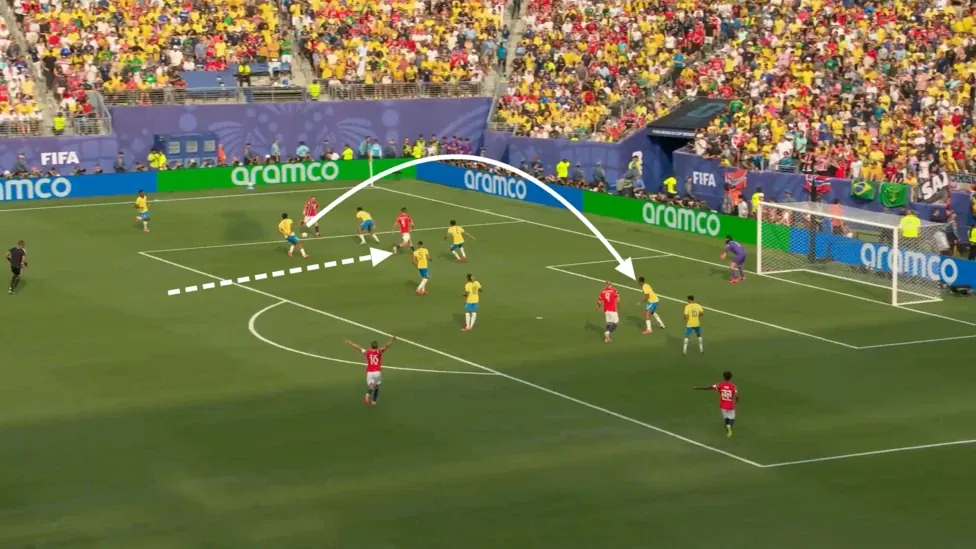
Marc Guehi, if he starts, may recall a similar cross from Matheus Nunes while playing for Crystal Palace against Manchester City in 2024, which Haaland headed in. Crowding Haaland out is one of the few ways teams have managed to limit his impact. In a match against West Ham, then-Manchester City manager Pep Guardiola noted the significant defensive effort required to contain Haaland, with three central defenders and a holding midfielder often man-marking him. Preventing back-post crosses by doubling up in wide areas or using adept 1v1 defenders could be effective, though this might leave full-backs unmarked.
England’s manager Tuchel has used similar attacking dynamics with Anthony Gordon and O’Reilly. A more concerted defensive effort from Jude Bellingham, dropping into a midfield five when England is in a defensive block, could help. England can also aim to score by maintaining possession, pinning Norway back, and using their own wide units. If wide midfielders hold their position, opposition full-backs making runs off them can create 2v1 situations against Norway’s full-backs. O’Reilly could make underlapping runs similar to Moller Wolfe’s, opening space for wingers to cut inside. Pacy wingers pushing the ball past full-backs to the bye-line can create cut-backs for late-arriving attackers, a tactic Gordon has used for England.
If Norway loses possession, England can exploit the large spaces left behind, as Norway is susceptible to leaving fewer players behind the ball. Brazil, despite not scoring from open play, created numerous chances through counter-attacks when they won the ball back. Players like Gordon, Bellingham, Rice, and Noni Madueke are adept at attacking these spaces.
Midfield battle and environmental factors
The midfield battle between Norway’s captain Martin Odegaard and England’s Declan Rice will be crucial. Odegaard carried the ball forward 61 times and completed 101 of 109 passes against Brazil, leading his side to limit Brazil’s possession to 33.6 percent. This was Brazil’s lowest possession in a World Cup match. England’s possession against Mexico was even lower, at 33.2 percent. To control the game, England will need to disrupt Odegaard’s play. Rice and Odegaard have played together for Arsenal over the past three seasons, winning the Premier League title and reaching the Champions League Final.

Rice has been dealing with neural pain affecting his lower back and hamstring. He played minutes in the Premier League this season, while Odegaard played minutes, suggesting Odegaard might have more freshness. Another factor will be the heat and humidity in Miami. The forecast for Saturday is around 33C (91F) with 58 percent humidity and a threat of thunderstorms. Norway has played four of its five tournament matches in hot and humid conditions, including games in Boston and New York/New Jersey, and their win over Ivory Coast in Dallas was in enclosed conditions. England’s matches have included games in Dallas, Boston, New York/New Jersey, Atlanta, and Mexico City, with varying conditions. The ability of either team to adapt to the conditions could be a deciding factor in who progresses to the semi-finals on Wednesday night.
England’s right-back situation is also a concern, as Reece James has missed the last three matches due to a hamstring injury sustained against Ghana. With Tino Livramento out with a calf injury, James was the only recognized right-back in the squad. Djed Spence, Ezri Konsa, John Stones, and Jarell Quansah have all been deployed on the right side of defence since James’s injury.
The match will also highlight the individual defensive performances against Haaland. Dan Burn, a 6’7″ Newcastle centre-back, was a surprise inclusion in Tuchel’s squad. Despite making only four starts for England, all against Andorra and Albania in World Cup qualifying, his cameo against Mexico proved effective in heading away crosses and defending a 3-2 lead. Burn is two inches taller than Haaland and has had physical battles with him in previous Premier League meetings. Haaland has scored only once in eight games against Burn since joining Manchester City in 2022, and only once in 406 minutes against Ezri Konsa across five matches. These statistics are encouraging for Tuchel, given Haaland’s record of goals in Premier League appearances across four seasons.
The match is scheduled for Saturday night in Miami, Florida.
Read Also
Source: bbc.com

