India equals world record for 200-plus T20I totals in a calendar year

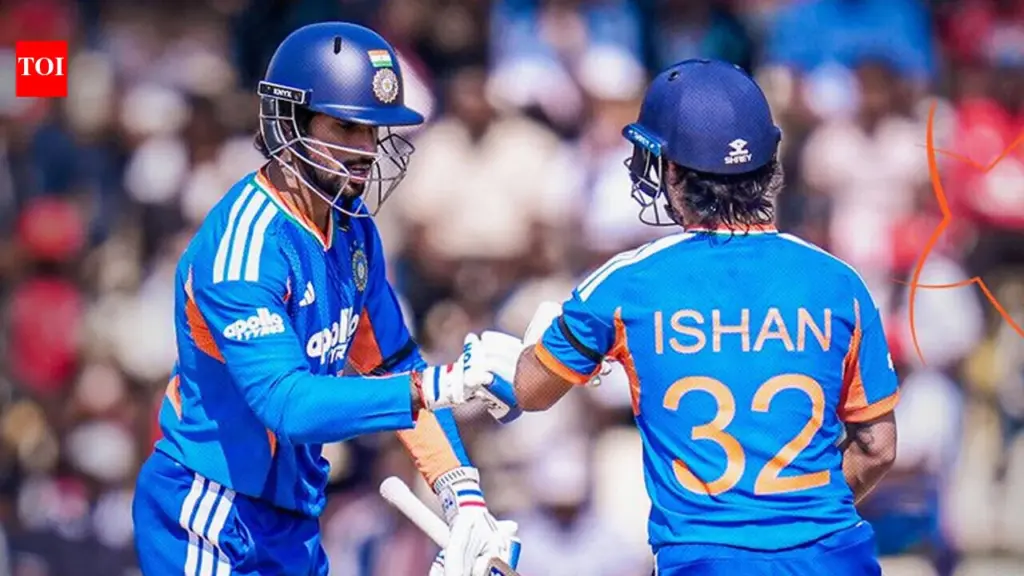
India has matched its own world record for the most 200-plus totals in a calendar year in T20 Internationals. This achievement came after the team posted 219/5 against Zimbabwe in the second T20I. The 219-run total represents India’s ninth score of 200 or more runs in T20Is during 2026, equalling the record previously set by India in 2024.
No other full-member nation has achieved more than six such totals in a single calendar year, highlighting India’s consistent batting performance in the shortest format of the game. India has now surpassed the 200-run mark 52 times in T20Is, extending its all-time record. In comparison, South Africa, the next-best side, has reached this milestone 29 times.
India’s remarkable consistency
India’s sustained batting prowess is evident in the all-time list for most 200-plus totals in a calendar year. The team first established the benchmark with nine such scores in 2024 and has now replicated this feat in 2026. Additionally, India recorded seven 200-plus totals in 2023, securing three of the top five positions on this list.
The list of most 200-plus totals in a calendar year in T20Is includes:
- 9 – India (2024)
- 9 – India (2026)
- 7 – India (2023)
- 7 – Japan (2024)
- 7 – Austria (2025)
- 6 – England (2022)
- 6 – South Africa (2022)
- 6 – West Indies (2024)
This latest milestone was achieved even after India faced an early setback, falling to 29/2 after being asked to bat first.
Kishan and Tilak lead recovery
Zimbabwe made early inroads, taking two wickets within the powerplay. Abhishek Sharma and Vaibhav Sooryavanshi departed cheaply. Abhishek Sharma offered a catch to Ryan Burl off Blessing Muzarabani, while Vaibhav Sooryavanshi, after scoring 20 runs off nine deliveries, misjudged a Richard Ngarava bouncer and was caught at mid-on.
Under pressure, Ishan Kishan and captain Shreyas Iyer stabilised the innings with a 66-run partnership for the third wicket. Following Iyer’s departure, Kishan found a strong partner in Tilak Varma, as the pair added 94 runs, shifting the momentum in India’s favour.
Ishan Kishan played a significant innings, scoring 81 runs and pacing his knock effectively. He reached his half-century in 31 balls before accelerating, adding 31 more runs in 13 deliveries. His leg-side strokeplay was particularly effective, with Zimbabwe’s bowlers struggling to contain him in the mid-wicket region.
Tilak Varma complemented Kishan’s efforts with an unbeaten 60 runs off 29 balls. The left-hander reached his fifty in 23 deliveries, combining elegant shot placement with powerful hitting. This performance helped to address recent discussions regarding his strike rate.
The partnership between Kishan and Varma propelled India to score 61 runs in the final five overs, ultimately setting an imposing total of 219/5. During the innings break, Tilak Varma credited Kishan for setting the tone for their partnership.
Tilak Varma mentioned, "We felt anything around 200 would be a really good score here. But when you think about 200, obviously the score can go to 220, especially the way Ishan batted. It was tremendous to watch." The 23-year-old also shared that discussions with head coaches Gautam Gambhir and VVS Laxman encouraged him to focus on ground strokes rather than relying solely on aerial shots. He added, "I’ve been talking with Gautam sir and now with Laxman sir about finding the gaps. If you hit through the ground, your consistency improves. I worked really hard during the break after the England series, and I’m happy it came through today."
Zimbabwe’s chase and Indian bowling efforts
In response to India’s total, Zimbabwe began their chase. Sikander Raza entered the crease and scored a single off a leg bye. Leg-spinner Ravi Bishnoi was introduced into the attack. After a dot ball, Myers hit a slower ball through covers for a boundary. Two subsequent dot balls led to Myers’ dismissal, as he was bowled out for 12 runs off nine balls by a googly, attempting to drive and getting an inside edge. This brought Zimbabwe to three wickets down.
Ryan Burl, the new batter, edged a ball towards slip, which fell short of Sooryavanshi, allowing him to get off the mark with a single. Myers and Burl then each took a single before Myers ramped a short ball over third man for a boundary. Myers later advanced down the track and hit the ball past a diving Tilak Varma at cover, resulting in three runs. The over concluded with 10 runs.
Prince Yadav was brought into the attack, and Curran got a leading edge off a full ball, which was caught by Dube at third man. Curran was out for 2 runs, leading to the loss of both of Zimbabwe’s openers quickly. Dion Myers then came in and started with a dot ball, with the over yielding 11 runs and a wicket.
Thakur continued his spell, and after a dot ball, Bennett moved across the stumps and ramped the ball over the keeper for a six. Bennett then flicked the ball over the infield for a boundary past mid-wicket. After a dot ball, a wide was called for a bouncer. Bennett attempted another cheeky shot but failed to pick up the slower ball, miscuing it to be caught by Kishan. Bennett was dismissed for 32 runs off 19 balls.
Mayank continued bowling, and after a dot, Bennett shuffled across the stumps and scooped the ball over the keeper for another six. A dot ball followed, and Bennett then took a single to mid-wicket. Curran attempted a ramp shot but missed. He then pulled the ball towards Sooryavanshi at short fine leg for a dot ball, with the over yielding only 7 runs. India’s batting unit continues to set new standards in T20I cricket, as seen in their performance on July 25, 2026.
Source: timesofindia.indiatimes.com

