Atlanta: Messi masterclass guides Argentina past England into World Cup final


Messi’s Strategic Play Against England’s Press
Argentina secured a 2-1 victory over England in the World Cup semi-final in Atlanta, largely due to the influential performance of Lionel Messi. Despite being 39 years old, Messi’s footballing intelligence compensated for any physical changes, allowing him to effectively direct Argentina’s play on the field. England initially attempted a high press, with wingers Anthony Gordon and Morgan Rogers tasked with pressuring Argentina’s central defenders, including Cristian Romero and Lisandro Martinez, to prevent passes to full-backs from goalkeeper Emiliano Martinez.
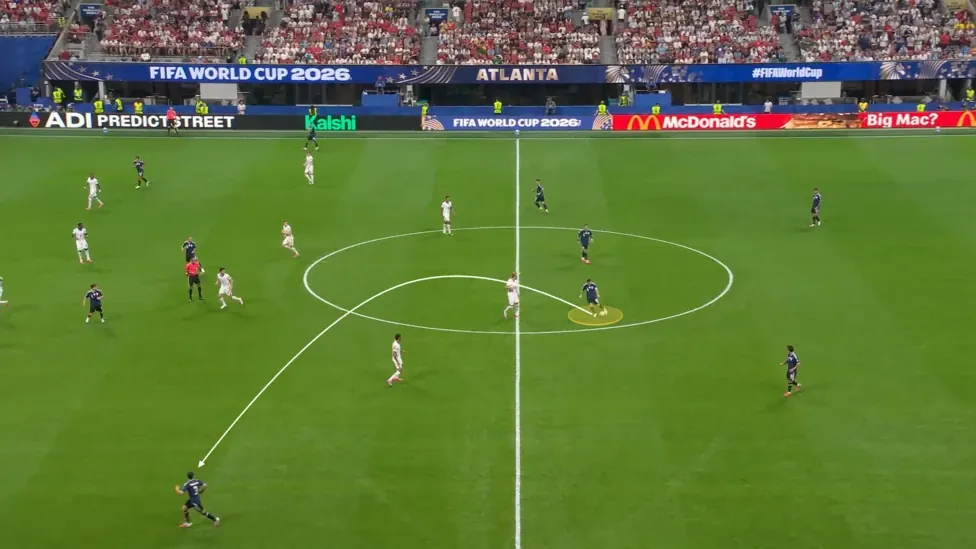
England’s midfield, featuring Jude Bellingham, Declan Rice, and Elliot Anderson, aimed to stifle Argentina’s central-focused play. Anderson, in particular, initially succeeded in smothering Messi. However, Messi, alongside teammates Enzo Fernandez and Alexis Mac Allister, gradually found their rhythm. Messi began to adopt deeper positions, creating a dilemma for Anderson regarding how closely to mark him. Messi’s deceptive walking pace allowed him to conserve energy before bursting into action, forcing England’s defence to react and creating advantages for Argentina as England’s press began to tire.
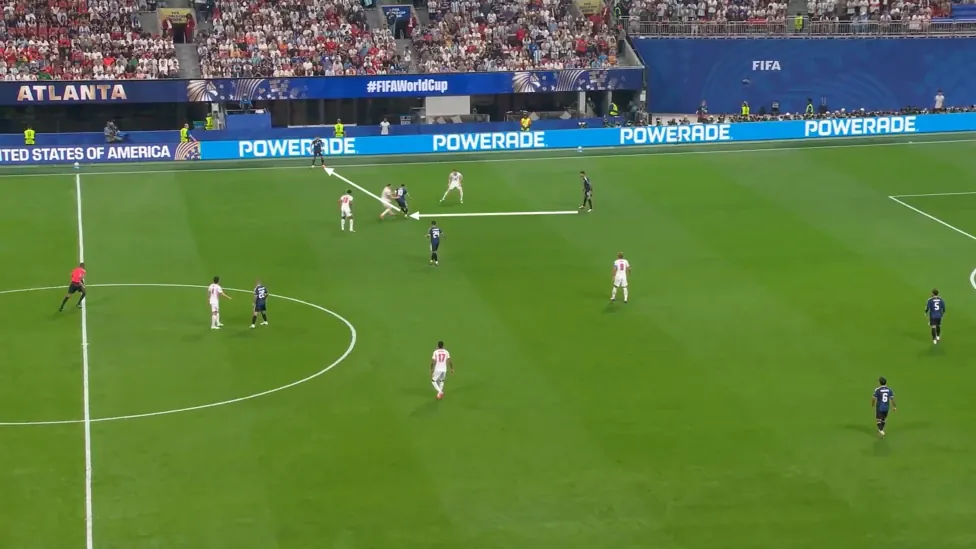
Messi adapted his approach to counter Anderson’s aggressive style. He would hold the ball, drawing Anderson out of position, and then release it to teammates in the newly created space. This tactic was evident in Argentina’s opening goal, where Messi’s one-two after a short corner exploited Anderson’s willingness to engage in duels. Messi’s delayed pass, after attracting multiple defenders, allowed Fernandez ample space to score decisively.
Argentina’s Comeback and Tactical Adjustments
England took the lead in the 55th minute through Anthony Gordon. Following this, England’s coach, Thomas Tuchel, shifted to a back five, a tactic previously used successfully against Mexico and Norway. However, this strategy led to England having only 12 percent possession between their goal and Argentina’s equaliser, forcing them to defend deep for much of the second half.
Argentina persisted in their attack, with Messi identifying and exploiting weaknesses in England’s defensive structure. Fernandez scored a brilliant equaliser in the 85th minute, assisted by Messi. Lautaro Martinez then secured the winning goal in stoppage time with a header from a Messi cross, sealing a 2-1 victory for Argentina.
Messi’s ability to find and exploit space was crucial. Against England’s deep and centrally compact formation, he positioned himself in unmarked areas, either deep in front of England’s block or wide on the right touchline. This allowed him to receive the ball with time and space or to draw defenders, disorganising England’s formation and opening up opportunities elsewhere. His unorthodox positioning, combined with his dribbling and passing, enabled him to control the game.
Impact of Player Positioning and Scaloni’s Strategy
Bellingham’s defensive positioning also played a role in Argentina’s success. Messi recognised that Bellingham was often caught high up the pitch or drawn towards the ball, creating space behind him on the right side. This allowed Argentina to sustain attacks and create dangerous crosses into the box. Messi and a teammate often created two-against-two situations on the right flank, and at times, a three-against-two overload if Bellingham did not track back effectively.
Tuchel’s decision to move to a 5-3-2 formation, and later a 5-4-1 after Declan Rice’s substitution and Nico O’Reilly’s introduction, inadvertently suited Messi’s game. With England’s back five pinned deep, their three central midfielders struggled to cover the width of the pitch. Messi capitalised on this by playing closer to goal from his deeper, right-sided role. Bellingham’s unfamiliar role in holding midfield further allowed Argentina to move the ball from the left to the right, where Messi could operate effectively.
Argentina’s coach, Lionel Scaloni, made strategic changes, including flipping the roles of Fernandez and Mac Allister, allowing Mac Allister to attack crosses, and introducing Nico Gonzalez and Lautaro Martinez, along with Rodrigo de Paul out wide. These adjustments created an attacking setup that provided easy access to the right wing, leading to reliable crosses and strong attackers to head the ball. Argentina will now face Spain in Sunday’s final.
Read Also
Source: bbc.com

