ICC unveils new formats for Men’s ODI and T20 World Cups

New ODI World Cup format
The International Cricket Council (ICC) has introduced a revamped format for the 2027 ODI World Cup. This new structure has led to discussions regarding the tournament’s inclusivity, even as it officially expands the number of participating teams from 10 to 14. Critics suggest that the format might limit meaningful participation for lower-ranked sides, as the three lowest-ranked qualified teams will compete for a single spot in the main competition, with the other two being eliminated early.
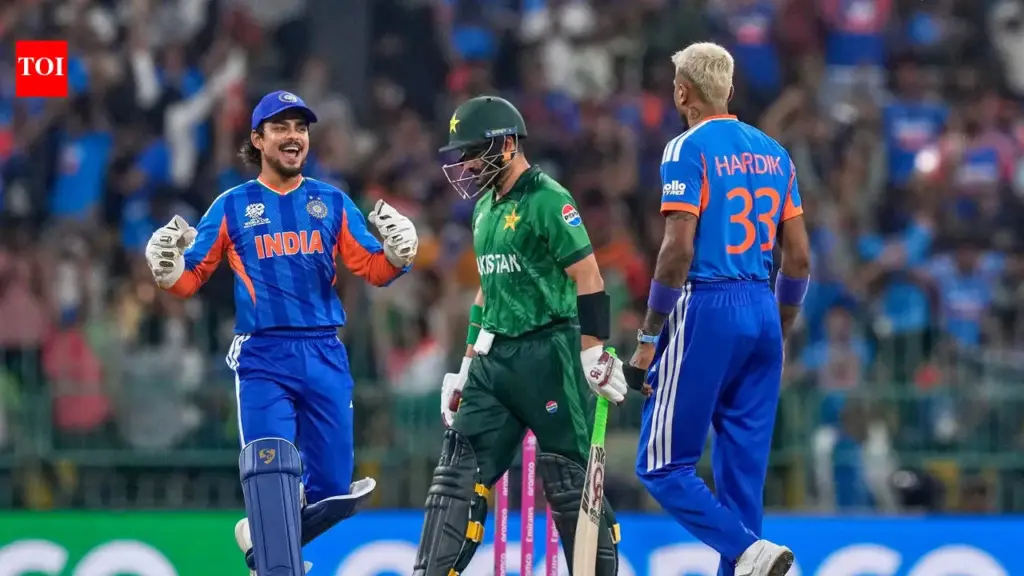
The ICC states that the changes aim to enhance the significance of every match from the outset and strengthen the competitive narrative. However, the format also increases the possibility of multiple encounters between major cricketing rivals, such as India and Pakistan.
The tournament is set to commence with a ‘Super Series’ involving Teams 12, 13, and 14, where only the winner will progress. Following this, the remaining 12 teams will be divided into two groups of six. Each team will play every other team in its group once. The top three teams from each group, along with the next best team overall, will qualify for the Super 7 stage.
Given the ICC’s practice of not using a completely random draw for its global events, India and Pakistan have frequently been placed in the same group in past tournaments. If this trend continues in 2027, a first encounter between the two teams could occur during the group stage.
The Super 7 stage will feature the seven qualifying teams competing in a single round-robin format. If both India and Pakistan advance to this phase, they would be guaranteed a second match against each other within the same tournament. The top four teams from the Super 7 will then proceed to the semi-finals.
The format also allows for a potential third match between India and Pakistan. If both teams reach the semi-finals, they could face each other if they finish first and fourth, or second and third, in the Super 7 standings. Should they be on opposite sides of the draw, a third encounter could take place in the final. This revised format therefore makes provisions for as many as three matches between India and Pakistan in a single ODI World Cup.
Revised T20 World Cup format and qualification
The ICC Men’s T20 World Cup will continue to offer a platform for emerging cricketing nations, building on the performances seen in the recently concluded 2026 tournament. The updated format aims to expand opportunities for these nations while increasing the competitiveness in the later stages of the event.
The 2028 edition of the tournament, which will be co-hosted by Australia and New Zealand, will remain a 20-team event but will feature format changes. The group stage will now consist of five groups of four teams, a shift from the previous format of four groups of five used in the 2026 ICC Men’s T20 World Cup. The top two teams from each group will advance to the Super 10 stage.
The Super 10 round will comprise two groups of five teams, playing in a round-robin format. The winners of each Super 10 group will directly qualify for the semi-finals. The remaining two semi-final spots will be determined through a new Eliminators round, where the second-placed teams from each Super 10 group will play against the third-placed teams from the opposite group. The winners of these Eliminators will complete the semi-final line-up, with the semi-finals and final retaining their existing format.
Twelve teams have already secured their places for the 2028 tournament based on their performance in the 2026 T20 World Cup and their team rankings. These teams include Afghanistan, Australia, Bangladesh, England, India, Ireland, New Zealand, Pakistan, South Africa, Sri Lanka, West Indies, and Zimbabwe.
The ICC has also confirmed an updated qualification pathway for the ICC Men’s T20 World Cup 2028. Scotland will directly progress to the Europe Regional Final due to specific circumstances surrounding its participation in the 2026 tournament, where it qualified after Bangladesh withdrew. Other teams that participated in the ICC Men’s T20 World Cup 2026 but did not secure automatic qualification for 2028 will advance directly to the Global Qualifier. These teams are Canada, Italy, Namibia, Nepal, Netherlands, Oman, United Arab Emirates, and the United States.
The remaining eight places in the Global Qualifier will be decided through regional qualification, with two teams qualifying from Africa, two from Asia, two from Europe, one from the Americas, and one from the East Asia-Pacific region. From the Global Qualifier, the highest-placed team from each region will qualify for the ICC Men’s T20 World Cup 2028, along with the next three highest-placed teams overall, provided they meet minimum performance criteria. These new formats have been endorsed by the ICC Board, following recommendations from the ICC Development Committee and the ICC Chief Executives’ Committee, with final approval pending a review by the ICC Finance & Commercial Affairs Committee at its November meetings.
Read Also
Source: timesofindia.indiatimes.com

