Atlanta sees fan brawls and heated exchanges ahead of England-Argentina World Cup semi-final

Pre-Match Incidents in Atlanta
Hours before the highly anticipated World Cup semi-final clash between England and Argentina in Atlanta, reports emerged of altercations among Argentina supporters. Footage shared online depicted fans brawling and throwing various items, including bottles and furniture. The incidents occurred on the streets of Atlanta, with tensions escalating between two groups of Argentina fans on the night before the match.
The confrontations reportedly involved kicks and punches, with bins also being thrown. While the exact cause of the incident remains unclear, local police intervened to separate the groups. It is not known if any arrests were made, as the groups appeared to disperse after police involvement. These pre-match disturbances set a contentious tone for the semi-final fixture.

Anthem Protests and On-Pitch Scuffles
The heated atmosphere extended into the stadium as the national anthems were played. During England‘s anthem, “God Save the King,” Argentina supporters, who reportedly outnumbered England fans, sang chants, effectively drowning out the anthem. Chants included the phrase “now you see it, now you see it, whoever doesn’t jump is an Englishman.”
In response, England fans whistled during Argentina‘s anthem, though the voices of the Albiceleste supporters in the stands largely prevailed. This exchange of jeers and chants underscored the intense rivalry between the two nations, which has historical and political dimensions, including the Falklands War in 1982.
The on-field action quickly mirrored the pre-match tension. Within the first few minutes of the game, a challenge from Argentina‘s Leandro Paredes on Jude Bellingham, followed by an arm to Elliot Anderson‘s head by Enzo Fernández, sparked the first on-pitch confrontation. This scuffle saw Bellingham and Paredes squaring up to each other once more.
The opening 20 minutes of the semi-final were marked by numerous fouls, with Elliot Anderson receiving several in the early stages. Giuliano Simeone, son of Diego Simeone, also went down after a slight push from England goalkeeper Jordan Pickford. Argentina‘s players reportedly sought to antagonise England‘s players off the ball, leading to Bellingham being involved in another flare-up.
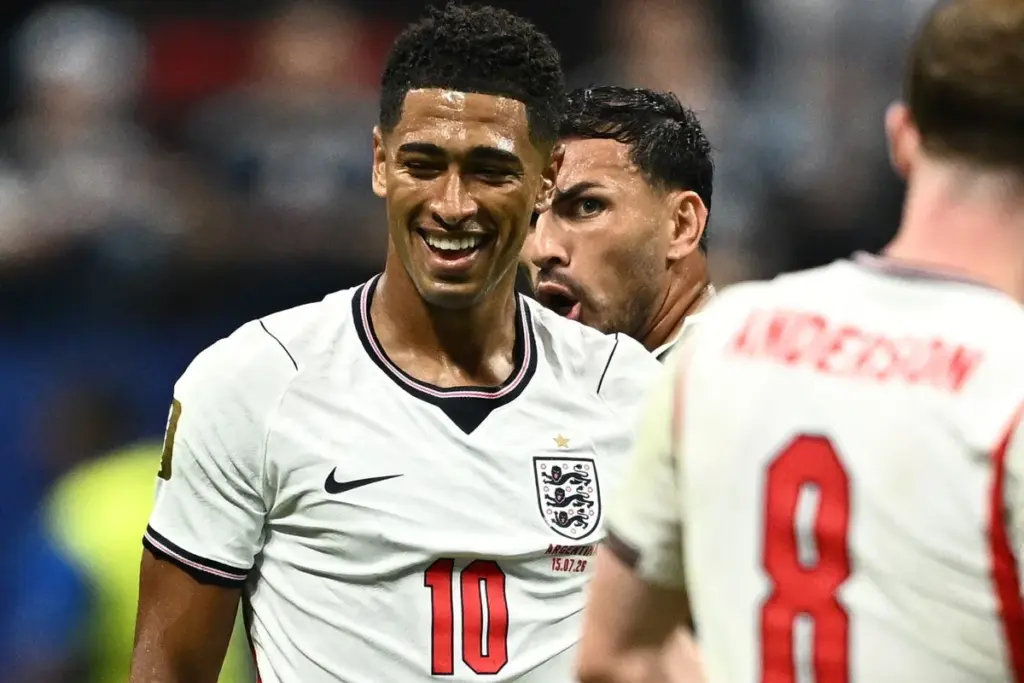
Following a fair challenge from defensive midfielder Paredes, the Argentina player appeared to exchange words with Bellingham during a stoppage in play. Bellingham was observed laughing off the apparent aggression, as the semi-final remained goalless midway through the first half. The referee, Ismail Elfath, did not issue any yellow cards despite 11 fouls being committed within the first 24 minutes of the match.
Team Line-ups and Context
Ahead of the match, England manager Thomas Tuchel announced his starting line-up, making three changes for the semi-final. Morgan Rogers was given a start, replacing Noni Madueke on the right side of the attack. Full-backs Reece James and Djed Spence also entered the starting eleven. The central defensive partnership of John Stones and Marc Guehi remained intact, with Ezri Konsa and Nico O’Reilly dropping out.
Declan Rice continued in midfield, despite having been substituted at half-time in the previous game against Norway due to illness. Argentina‘s squad featured five Premier League players in their starting line-up. These included Aston Villa goalkeeper Emiliano Martinez, Tottenham defender Cristian Romero, Manchester United‘s Lisandro Martinez, Chelsea midfielder Enzo Fernandez, and Liverpool‘s Alexis Mac Allister, all starting for the defending champions.
The historical rivalry between England and Argentina, intensified by the Falklands War, played a significant role in the narrative surrounding this World Cup semi-final. Argentina‘s claim over the Falkland Islands, located 300 miles off its east coast, is deeply ingrained in the country’s culture, including its football. This geopolitical context contributed to the highly charged atmosphere witnessed both before and during the match on July 15.
Read Also
Source: dailystar.co.uk

