England manager Thomas Tuchel voices concerns despite World Cup quarter-final victory

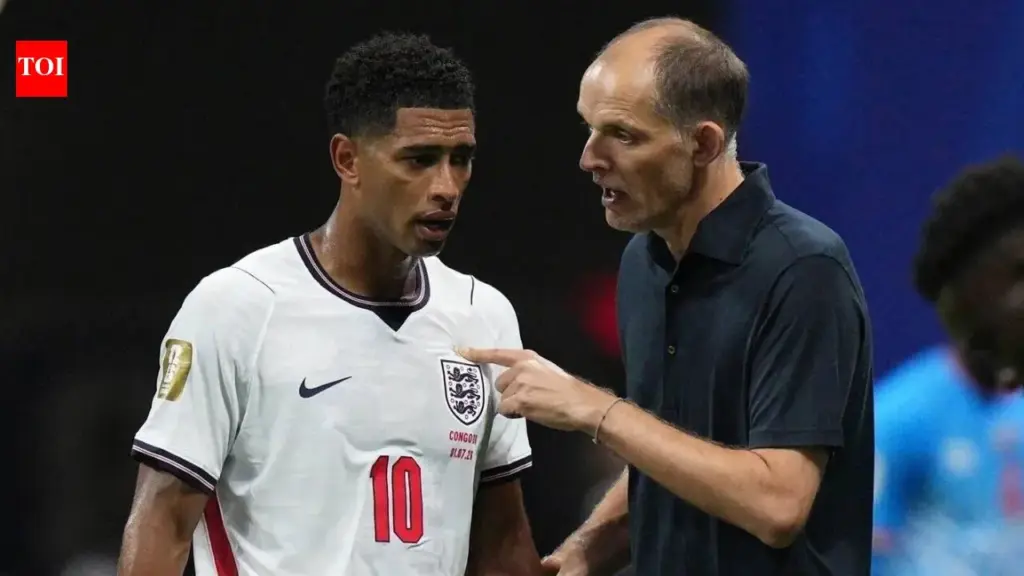
England manager Thomas Tuchel has voiced concerns regarding his team’s performance following their World Cup quarter-final victory against Norway. Despite securing a spot in the semi-finals, Tuchel stated he was “not happy with the performance,” highlighting that the team “made life very difficult for ourselves.” He acknowledged the effort, team spirit, and belief shown by the players in overcoming adversity, but maintained that they are capable of playing better. Tuchel described the play as “sloppy, a lot of technical mistakes, not fast enough, not repetitive enough.”
His comments came after England’s win in Miami, where Jude Bellingham scored both goals. When informed of Tuchel’s remarks during his own post-match interview, Bellingham appeared frustrated, responding with an eye roll and stating, “whatever.” He added that it was a “tough shift” and praised his teammates’ effort. Bellingham also emphasized that it is not always possible to win by “popping a thousand passes” and sometimes a team has to “win dirty.”
Tuchel’s tactical expectations
Tuchel’s selection for the World Cup squad indicated a clear preference for a specific style of play. This approach is built on key principles including dominating possession, aggressive pressing, and using deliberate passes to draw out opposition pressure. Once pressure is enticed, the aim is to accelerate play to find forwards in space. Against defensive blocks, the strategy involves attacking down the flanks, utilising wide triangles and rotations to create opportunities.
While glimpses of these principles have been seen throughout the tournament, Tuchel remains unsatisfied. His post-match critique after the Norway game focused on how his side played on the ball. Norway defended in a 4-5-1 shape, blocking space, while England attacked in a 3-2-5 formation. Marc Guehi, John Stones, and Ezri Konsa formed the first line, with Declan Rice and Elliot Anderson in midfield. Left-back Nico O’Reilly joined the front four, creating an overload against Norway’s defence.
Tuchel’s comment about England not being “repetitive enough” likely referred to a lack of sustained periods of possession with short passing, intended to draw Norway out. This tactic aims to create space for attackers, either out wide or through long balls over the top. In a group stage match against Ghana, who also used a 4-5-1 block, Tuchel was heard instructing his players to play “short, short, short” before executing a “long switch.” This was observed in the first quarter against Norway, with Anderson often playing long to Noni Madueke after drawing the Norwegians to one side of the pitch.
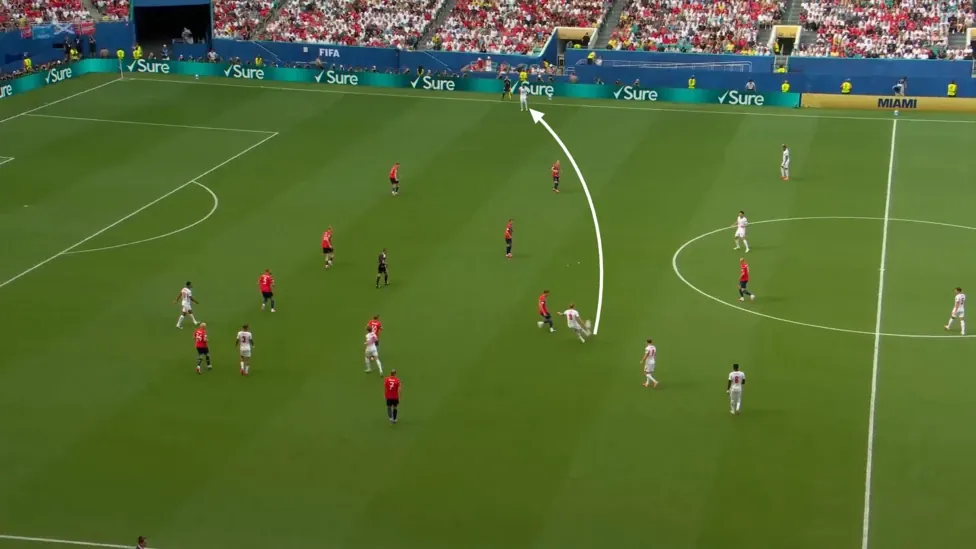
The wingers did not fully capitalise on these moments, but England did show instances of Tuchel’s desired attacking principles. However, as the game progressed, this repetitive baiting of pressure became less frequent.
Unrealised wide attacking potential
Positional rotations within wide triangles were intended to be a primary attacking strategy for England throughout the tournament under Tuchel. His frustrations after the Norway match likely stemmed from the fact that Norway’s 4-5-1 setup provided ideal conditions for these tactics, yet England was deemed “not fast enough.” Norway’s wide midfielders maintained their positions in line with the central midfielders rather than dropping into the defensive line, and their back four remained narrow.
This defensive setup offered multiple solutions for England through their wide triangles. For example, Anthony Gordon moved centrally as Anderson pulled wide, with both players often unmarked against Norway’s zonal defence. Norway’s zonal marking meant they tracked players entering their zone rather than specific individuals. If England players had made off-the-ball runs into empty spaces, they would have found themselves free. Quickly playing the ball to these wide players would have created numerical advantages around the opposition full-back.
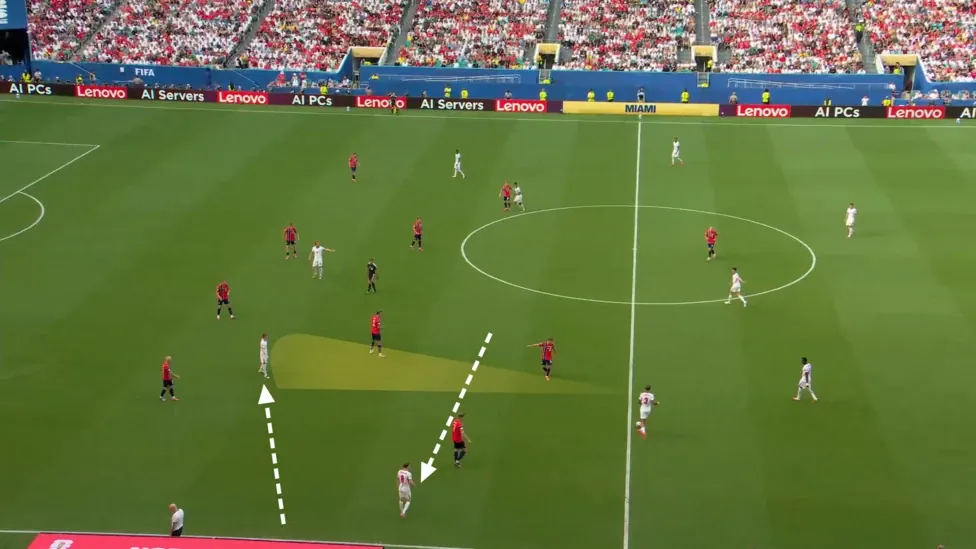
Tuchel’s frustration is understandable. The manager likely referred to moments of “sloppy” play when passes were not made quickly enough to free players out wide, leading to situations where the ball was lost in dangerous areas.
Assistant coach Anthony Barry‘s half-time comments during England’s opening match against Croatia, where he noted the team was “not playing through the gaps, not [accelerating] our game the way we wanted to” and “fell back into some fearful patterns,” still resonated five games later, despite England reaching the semi-finals.
Winning despite performance concerns
Despite not fully exploiting Norway’s defensive weaknesses, England still secured the win. For England’s first goal, a long goal-kick found Anderson, who carried the ball up the pitch against a disorganised Norway defence. His run committed the right-back, allowing Gordon to run unmarked down the flank. This drew a centre-back across, and a midfielder dropped into the defensive line, creating space centrally for Bellingham, who scored.
This pattern of play, where England capitalises on an opponent’s momentary disorganisation, was also seen in their opening goal against Mexico. In that instance, Rice carried the ball up the pitch after a quick turnover, drawing the full-back away from Saka, which allowed Bellingham to make a late run and score. These moments highlight the players’ ability to take advantage of disorganised defences and showcase their natural skills, such as Bellingham’s timing and instinct, and Rice and Anderson’s ball-carrying.
England’s winning goal against Norway also came from a moment of disorganization after a corner. In the subsequent phase of play, England seized the opportunity, with players relying on their individual strengths. Morgan Rogers’ long-range shot was parried by the goalkeeper, and Bellingham scored from the rebound through expert anticipation. Bellingham’s post-match comments acknowledged the various facets of the game, including technical, tactical, and psychological aspects, and the importance of managing adversity.
The team’s ability to perform well in chaotic game situations has been praised, demonstrating a strong psychological aspect. England secured their place in the last four in Miami.
Read Also
- Southampton: England secure 4-0 T20I series win against India, claim top ranking
- Las Vegas hosts UFC 329: McGregor vs Holloway 2 main card results
- Lord's to host farewell for England cricketers Heather Knight and Tammy Beaumont
- BCCI discusses future of Ryan ten Doeschate and Morne Morkel as T Dilip faces scrutiny
Source: bbc.com

